Where Romance Meets Typography: The Wedding Welcome Canvas
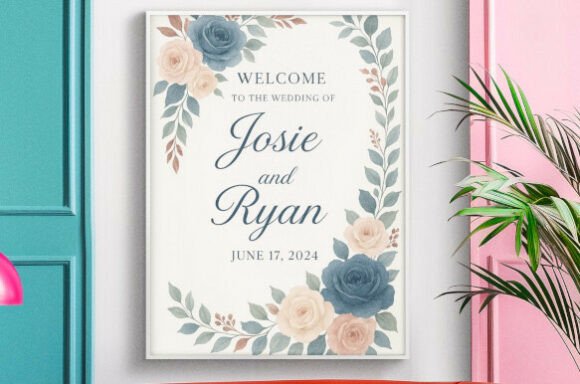
There is a specific moment at every wedding, just after the guests arrive and before the ceremony begins, where the atmosphere is set. It is the moment of greeting, the transition from the everyday world to a space dedicated to love and celebration. While flowers and lighting do much of the heavy lifting, the typography you choose for your signage acts as the voice of the event. A Wedding Welcome Sign is more than just a placard; it is the opening line of your story. Imagine a refined canvas beautifully adorned with delicate floral arrangements, where graceful blossoms and foliage frame the layout, creating a romantic and timeless atmosphere. When typography harmonizes with these botanical elements, it creates a statement piece that doesn't just direct traffic—it captivates the heart.
Crafting an Atmosphere with Typography
For designers and creative entrepreneurs, understanding how to select a typeface that mimics the fluidity of nature is a crucial skill. When we talk about a design that features "graceful blossoms and foliage," we are describing a layout that requires a specific typographic personality. You need a font that feels organic yet structured, elegant yet legible. This is where the choice between a script font, a serif font, or a handwritten font becomes a strategic decision rather than just an aesthetic one.
If you are designing for a client or creating assets for a digital product shop, consider the mood of the floral arrangement. Delicate, trailing vines and soft peonies pair beautifully with a flowing script font that mimics the movement of the petals. However, if the foliage is structured and sharp—like eucalyptus or ferns—a modern serif font with high contrast can provide a stunning, sophisticated counterpoint. The goal is visual consistency; the typography should look as though it grew naturally alongside the greenery.
Beyond the Ceremony: Commercial Applications
While the primary use case is greeting guests, the utility of a premium wedding typeface extends far beyond the altar. For small business owners in the stationery, event planning, or floral industries, a high-quality display font is an indispensable design asset. It allows you to create a cohesive brand identity that resonates with a clientele looking for romance and elegance.
Consider how this aesthetic translates across different mediums:
- Packaging Design: If you sell artisanal chocolates, candles, or wedding favors, a romantic script font on your labels instantly communicates luxury and care.
- Social Media Graphics: Instagram and Pinterest are visual-first platforms. Using a refined typeface for quotes, sale announcements, or mood boards helps in building brand recognition and stopping the scroll.
- Logo Design: For boutique businesses, a custom wordmark using a stylized script can become an iconic symbol of quality.
- Invitations and Print Materials: Beyond the welcome sign, these fonts are essential for save-the-dates, menus, and thank-you cards.
By investing in a premium font, you are not just buying letters; you are buying a tool that ensures your professional presentation is consistent whether the client is looking at your website or holding a physical menu.
The Science of Readability in Decorative Type
A common pitfall in editorial design and signage is prioritizing flair over function. While a highly ornate calligraphy font might look stunning in a digital mockup, it can fail miserably when printed on a canvas viewed from ten feet away. The "romantic and timeless atmosphere" described in the concept relies on the guest actually being able to read the message without squinting.
When choosing your modern typography, you must test for readability. A helpful practical tip is the "squint test." If you squint at your design and the text blurs into an unreadable blob, the letterforms are likely too thin or the ligatures too complex for that specific application. For a wedding welcome sign, look for fonts that have distinct characters for 'a', 'o', and 'e' so they don't close up at smaller sizes or lower resolutions.
Furthermore, consider the font pairing. A highly decorative script is rarely meant to stand alone for all text. You might use the script for the names or the word "Welcome," but the details—like the date or the schedule—often require a clean sans serif font. This hierarchy guides the eye and ensures the information is communicated effectively while maintaining the romantic vibe.
Choosing the Right Style for Your Project Goals
When selecting a typeface for a project that demands elegance, you are essentially choosing a personality. Is the brand voice whimsical and organic? Or is it formal and traditional? This distinction dictates whether you lean toward a handwritten font or a structured serif.
For web design and blogs, loading times and screen rendering are vital. A heavy, vector-based script font can slow down a site. In these cases, look for "web-optimized" versions of your chosen typeface or use the decorative font strictly for hero images and headers, while using a lightweight sans-serif for body text. This approach maintains the audience engagement through visual appeal without sacrificing the user experience.
For merchandise—think tote bags, mugs, or t-shirts—the medium matters. A font with very thin, wispy strokes might look beautiful on a high-resolution screen but may disappear when screen-printed on fabric. Always review the included font styles; a family that includes a bold or heavy weight is often more versatile for commercial manufacturing than a font that only comes in light or regular.
Practical Advice for Designers and Entrepreneurs
Before finalizing your design for that statement piece to greet guests, take a moment to review the technical specifications. Commercial licensing is a critical, often overlooked aspect. Ensure that the license covers your specific intended use, whether it is for physical signage, digital templates for sale, or marketing assets. Using a font without the proper license can lead to legal headaches that disrupt your business operations.
Additionally, don't be afraid to mix eras. A vintage-inspired floral arrangement can look surprisingly fresh when paired with a very modern typography style. Conversely, a minimalist, contemporary floral installation can be softened by a classic, old-world serif. The tension between the style of the graphics and the style of the type is often where the most interesting design happens.
Ultimately, the goal is to create a seamless experience. When a guest approaches that canvas, adorned with blossoms and elegant lettering, they should feel the intention behind the design. By carefully selecting your fonts, testing your pairings, and understanding the context of your medium, you create more than just a sign—you create a memory.